
Coffee Terms for Beginners Explained (Friendly Coffee Vocabulary Guide)
Learn the most important coffee and espresso terms in this beginner-friendly guide to coffee vocabulary. From grind size and brew ratio to tamping and extraction, this post explains the basics in simple terms so you can improve your coffee at home and understand what makes a great cup of coffee.

Some links in this post are affiliate links; The Afternoon Pour Co may earn a commission at no extra cost to you. Product recommendations reflect our evaluation of user feedback from Amazon, Reddit, and trusted coffee review sites — because we take coffee seriously and aim to provide reliable guidance for your home brewing.
If you’ve ever felt confused trying to order coffee or make it at home, you’re not alone.
Terms like tamp, ratio, extraction, and crema can make coffee seem way more complicated than it actually is—but once you understand a few key words, everything becomes easier.
This beginner-friendly guide of coffee terms for beginners breaks down the most common coffee and espresso terms so you can:
- feel confident ordering at coffee shops
- make better coffee at home
- understand what actually affects taste
Let’s simplify it. ☕
If you are someone trying to save money making coffee at home, be sure to check out the best daily coffee deals we find!
We share the best ones (before they sell out) in our Facebook group 👇
Daily Coffee Deals ☕️ | The Afternoon Pour Co.
Basic Coffee Terms for Beginners You Should Know
Grind Size (One of the Most Important Factors)
Grind size refers to how fine or coarse your coffee grounds are.
Why it matters:
Grind size directly affects how your coffee tastes.
- Too fine → bitter, over-extracted coffee
- Too coarse → weak, watery coffee
💡 Think of grind size as controlling how fast water pulls flavor from the coffee.
Different brewing methods require different grind sizes:
- Espresso → very fine
- Drip coffee → medium
- French press → coarse
Coffee-to-Water Ratio (The Secret to Consistent Coffee)
The ratio is how much coffee you use compared to water.
Example:
A common ratio is 1:16 (1 part coffee to 16 parts water)
Why it matters:
- More coffee = stronger, richer flavor
- More water = lighter, weaker flavor
💡 If your coffee tastes too weak or too strong, adjusting your ratio is often the easiest fix.
Brew Strength vs. Caffeine Strength
These two are often confused.
- Brew strength = how strong your coffee tastes
- Caffeine content = how much caffeine is actually in it
A strong-tasting coffee isn’t always higher in caffeine.
Coffee Terms for Beginners: Espresso Vocabulary Explained
Espresso (The Base of Most Coffee Shop Drinks)
Espresso is a concentrated coffee made by forcing hot water through finely ground coffee under pressure.
It’s used to make:
- lattes
- cappuccinos
- Americanos
- iced coffee drinks
💡 Most coffee shop drinks start with espresso shots.
Tamp (A Small Step That Makes a Big Difference)
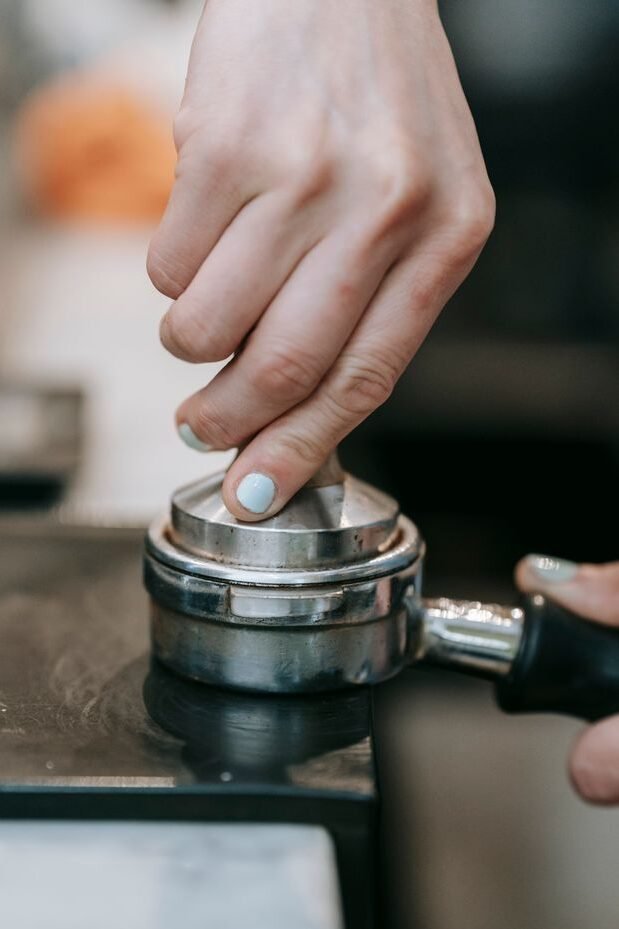
Tamping is when you press coffee grounds evenly into the espresso machine.
Why it matters:
- Ensures even water flow
- Prevents weak or bitter espresso
💡 Think of tamping as creating a smooth, even surface for water to pass through.
Uneven tamp = uneven extraction = bad-tasting espresso
Extraction (Where Flavor Comes From)
Extraction is the process of pulling flavor out of coffee grounds.
The goal is balance:
- Pull the good flavors
- Avoid the bitter or sour ones
💡 Extraction is what actually determines how your coffee tastes.
- Over-extracted → bitter
- Under-extracted → sour
Shot (Espresso Serving Size)
A “shot” refers to a serving of espresso.
- Single shot → about 1 oz
- Double shot → about 2 oz
Most coffee drinks use double shots as the standard.
Crema (The Golden Layer on Espresso)
Crema is the light, foamy layer that sits on top of a fresh espresso shot.
Why it matters:
- Indicates freshness and proper extraction
- Adds texture and flavor
💡 A good espresso shot usually has a rich, golden crema on top.
Common Coffee Mistakes (And Easy Fixes)
1.) Mistake: Using the Wrong Grind Size
✔ Fix: Adjust your grind based on your brewing method
2.) Mistake: Ignoring Coffee-to-Water Ratio
✔ Fix: Start with a standard ratio (like 1:16) and adjust to taste
3.) Mistake: Not Tamping Properly (Espresso)
✔ Fix: Apply even pressure when tamping—this improves consistency
4.) Mistake: Brewing Time Is Off
✔ Fix: Pay attention to brew time—over or under brewing changes flavor
Why Understanding Coffee Terms for Beginners Matters
Learning these basic coffee terms for beginners can completely change your experience.
You’ll be able to:
- make coffee that actually tastes good
- understand what you’re ordering at coffee shops
- troubleshoot bad coffee at home
- feel confident experimenting with new recipes
Coffee becomes less confusing—and much more enjoyable.
Want to Take Your Coffee Further?
Once you understand the basics, you can start exploring:
- how to make better iced coffee at home
- how to recreate Starbucks drinks
- the best syrups and flavors to use
- simple ways to upgrade your daily coffee routine
(These are great next steps if you want to start experimenting!)
💡 Pro Tip
Most coffee problems come down to just a few things:
- grind size
- ratio
- extraction
Once you understand these, you can fix almost any cup of coffee.
📌 Next Steps
If you found this Coffee Terms for Beginners Guide helpful, you might also like:
- How to Turn Iced Coffee Into Hot Coffee (without watering it down)
- Our Favorite Drip Coffee Machines
- Coffee Shop Ordering Guide
- Best Coffee Flavors and Syrups
Cheers and happy sipping!!
